
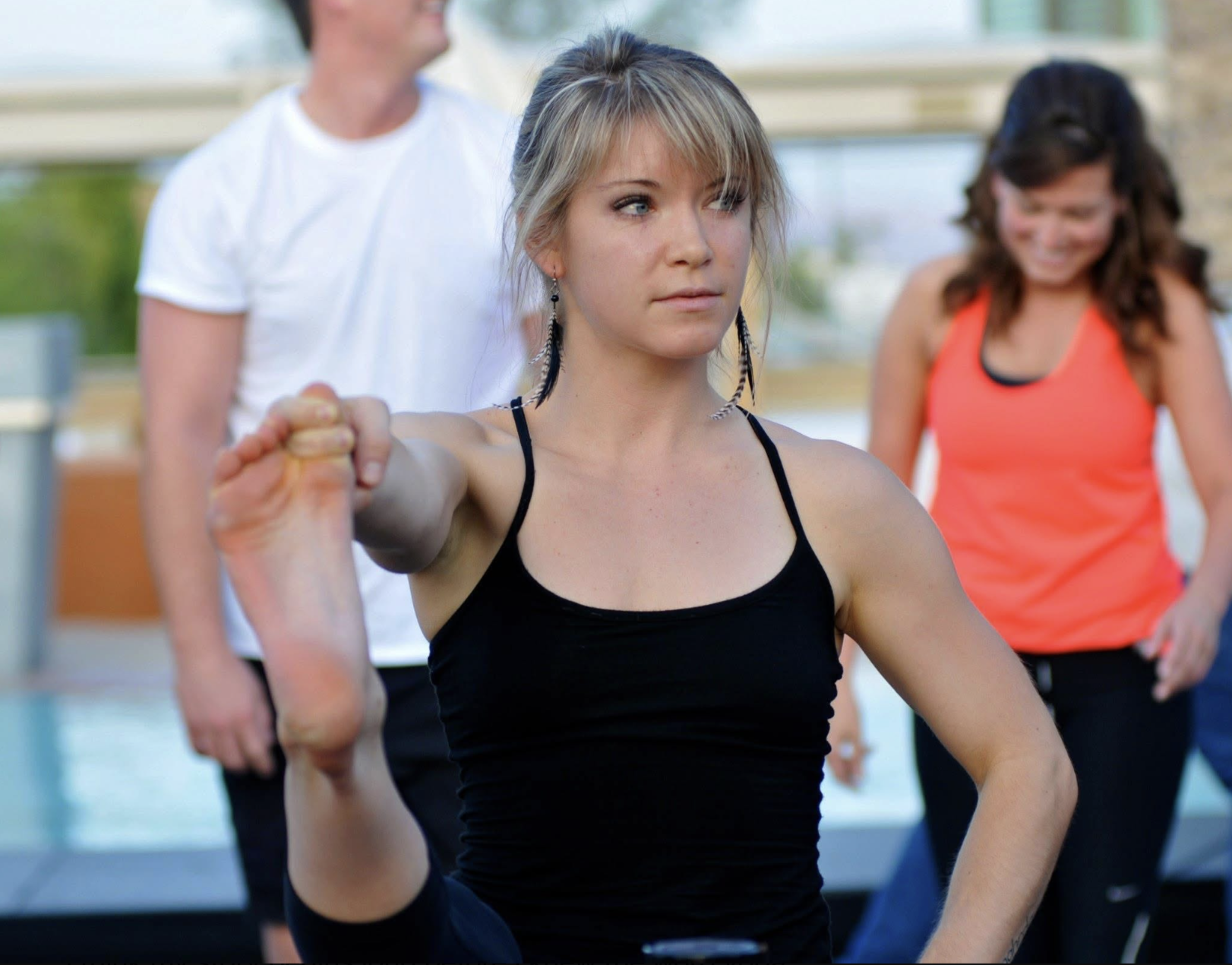
I think my story begins long before I knew the word yoga.
It begins in the ‘90s, when summer days somehow felt endless and the neighborhood kids always seemed to end up in our backyard. My brother and I practically lived on our trampoline. We taught each other gymnastics tricks and spent hours trying things I’d never willingly encourage my son to attempt today. There was no YouTube tutorial showing you how to do a handstand. No social media documenting how long you held it. And no need to come inside unless my mom had made mac n cheese or it was getting dark.
We were simply outside, moving our bodies.
Looking back, I don’t think I loved those days just because I was physically fearless. What I loved was the feeling of being completely immersed in whatever we were doing. Movement wasn’t exercise. It wasn’t something to optimize or improve. No one was counting calories or closing rings. We weren’t trying to get somewhere. We were just moving because moving felt good. I didn’t have language for it then, but I was deeply connected to my body.
I was also one of those kids whose body never let me get away with pretending everything was fine. If I felt anxious, my stomach hurt. If I felt stressed, I got a headache. If something was off emotionally, my body usually knew before my mind did. Friends who knew me back then are probably smiling as they read this because...yeah, that tracks, Shae got lots of tummy aches :).
Long before I understood anything about the nervous system or embodiment, I remember instinctively lying down and focusing on my breath whenever I felt overwhelmed. I wasn’t trying to meditate. I didn’t know that was even a thing. I only knew that slowing down and paying attention somehow helped.
Then adolescence arrived. My body was changing. The world around me was changing. And, well...it was the late ‘90s. We had SnackWell’s, low-fat everything, MTV, magazine covers that somehow convinced an entire generation of girls that shrinking ourselves was a reasonable life goal, and almost no language for what it meant to have a hormone-fueled nervous system doing exactly what nervous systems do during adolescence.
We had plenty of advice about how to change our bodies and almost none about how to understand them. Somewhere during those years, I slowly stopped listening to my body and started judging it instead. Looking back now, I can see that my story wasn’t really about eating disorders, although it certainly included anorexia, bulimia, compulsive exercise, and nearly every attempt imaginable to control my body.
It was about disconnection. I didn’t know how to regulate my nervous system. I didn’t know how to process difficult emotions. The body that had once been a source of information slowly became something I believed needed to be managed. Years later, pain forced me to stop running, and I wandered into a yoga studio simply looking for another way to move. I wasn’t searching for anything profound. I just wanted something that didn’t hurt. Yoga wasn’t the first movement practice I’d ever loved. But, it was the first one that asked me a question no one else ever had.
How do you feel? Not...How do you look? Not...How hard can you push? Not...How many calories did you burn? Just...How do you feel?
I don’t think that question changed my life overnight…
But I think it quietly changed the direction of it. For the first time in years, I started paying more attention instead of simply trying to control the outcome. As I learned to reconnect with my body, I also found myself reconnecting with emotions I’d spent years trying to push down.
Anxiety. Sadness. Anger. Frustration. Fear. Yoga didn’t immediately resolve the emotions. But it gave me enough space to finally sit with them. At first, I was drawn to a strong, athletic vinyasa practice. As a former gymnast, there was something deeply familiar and enjoyable about moving with strength, challenge, and intensity. I love a class that asks something of me physically.
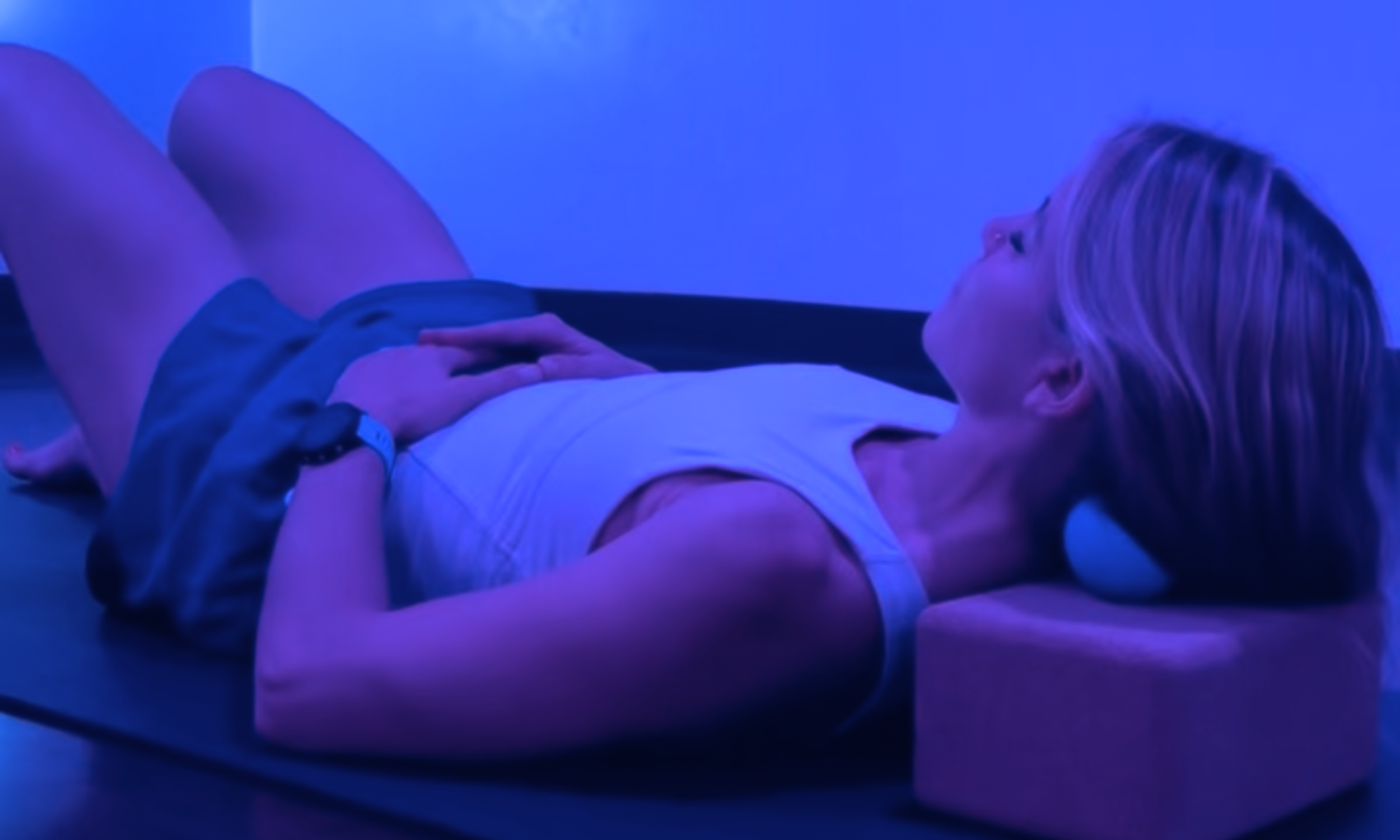
The difference is that yoga gradually expanded my understanding of what a practice could be. Some days, my practice asks me to move dynamically. Other days, it asks me to lie on a couple of therapy balls and breathe. Somehow, both feel equally like yoga now.
Over the next several years, yoga quietly wove itself into nearly every part of my life.
It introduced me to lifelong friends. While many people remember their twenties through bars and parties, I remember evening yoga classes followed by vegetarian potlucks around someone’s kitchen table. Those friendships weren’t built around performance or status. They were built around authenticity. Looking back, I don’t think those friendships happened because we all practiced yoga. I think they happened because yoga kept inviting us into a more honest relationship with ourselves, and from there, with each other.
When I was twenty-three, I signed up for yoga teacher training. Not because I wanted to teach. Honestly, I had no intention of teaching.
At the time, I was working in market research. I loved trying to understand why people made the decisions they did. I loved patterns and asking questions. Teacher training simply felt like another opportunity to better understand something that had profoundly changed my own life.
A few months after graduating, one of my friends who helped run a yoga studio casually added me to the teaching schedule. And because saying ‘yes’ felt easier than letting someone down, I started teaching. I wish I could tell you I walked confidently into that first class, but I didn’t. I was terrified.
The first year, before every class, just like my childhood, my nerves made themselves known as a stomach ache. Looking back, I’m incredibly grateful those early classes weren’t recorded. I honestly have no idea what I was saying up there. But somehow everyone survived.
So I kept showing up. Week after week. Class after class. And eventually, I noticed teaching yoga didn’t feel like becoming someone new. It felt suspiciously familiar. It felt a lot like being ten years old in my backyard, convincing the neighborhood kids that learning back walkovers was obviously the best possible way to spend an afternoon.
As I taught more, students naturally started asking questions after class.
“My shoulder hurts.”
“My back has been bothering me.”
“Is there a way to practice this pose without pain?”
Like many teachers fresh out of a two-hundred-hour training, I quickly realized how much I didn’t know. And if there’s one thing my market research brain has never been very good at... it’s leaving a question alone. That curiosity led me to Yoga Medicine and my first anatomy training with Tiffany Cruikshank.
I expected to learn muscles and biomechanics. Instead, I fell in love with fascia. What captivated me wasn’t just the tissue itself. It was the idea that nothing in the body exists in isolation. The fascial system is an interconnected web. Everything influences everything else. Local experiences ripple globally. Something about that felt immediately familiar. Not only because it described the body. Because it described life.
Ironically, the deeper I studied anatomy, the less interested I became in reducing people to anatomy. The more I learned, the more questions I had. The more I understood, the less invested I became in certainty.Instead, I found myself increasingly in awe of the body’s complexity while becoming equally convinced that the practices supporting it could remain beautifully simple. Breathe. Notice. Move. Rest. Listen. Repeat.
The therapy balls eventually became one of my favorite teaching tools because they offered something anatomy textbooks couldn’t: experience. People didn’t just learn where a muscle was. They felt it. Anatomy stopped being something to memorize and became something to inhabit. Looking back, I can see I wasn’t just learning more about the body. I was learning a different way of relating to it. And, if I’m honest, I still am.
In 2019, while leading a retreat in Guatemala, I found myself writing about my dream job. I didn’t know exactly what it would look like. But I knew how I wanted it to feel. I wanted to leave my desk job. I wanted to make a purposeful impact. I wanted to help build a movement community where people felt more connected to themselves and each other. I wanted to create education that blended movement, anatomy, curiosity, and embodiment without feeling confined by a single lineage or dogma.
Years later, I looked around and realized I was living many of the words I’d written. This was when I first realized there is quiet power in writing down what matters most. Not because life unfolds exactly as we imagine. But because clarity has a way of gently shaping the choices we make and the people who arrive in front of us.
As a teacher, I sometimes feel the quiet pressure to define yoga. It’s easy to feel like drawing a box around something makes you the expert. But recently I’ve started to believe many things are too expansive to define. Besides, what good comes from spending our precious time engaging in unnecessary debates or defending a singular definition? Yoga has always felt far too alive for that. It has expanded as I’ve expanded. It continues to meet me differently in every season of my life.
But if someone asked me today what yoga is to me, I’d probably say this:
Yoga is the way I return to relationship with myself through the practice of presence. Some days, that looks like movement. Other days, it looks like something else entirely. Sometimes it looks like a challenging vinyasa class. Sometimes it looks like lying on the floor with a couple of therapy balls and taking a breath before responding to my kid or being licked by my dogs. The practice changes, but the relationship remains.
Yoga reminds me that my body is not an object to manage. It’s a home to inhabit. It helps me reconnect with myself amidst the endless distractions of a stimulating world. It doesn’t promise that life will fall perfectly into place or be easy. But it helps me cultivate more steadiness than I’d have otherwise. I’ve also noticed that embodiment creates empowerment. And empowerment creates expansion. When I feel more at home in myself, I become less attached to proving I’m right and more interested in understanding. It’s obviously a work in progress (Am I right? ;))
But I’m finding that there’s more to celebrate in expanding my understanding than in defending my perspective. And maybe that’s another form of embodiment, too. Maybe over time, yoga become less about doing and the more about relating. And perhaps that’s the teaching. Not certainty. But relationship. Not performance. But presence. Not becoming someone new. But simply remembering something I think that little girl on the trampoline already knew.
The beautiful thing is that this story still doesn’t have an ending. Yoga has met me differently in every season of my life. It helped me reconnect with my body. It introduced me to lifelong friends. It unexpectedly introduced me to my husband (a story for another day). It carried me through fertility struggles. And now it continues to shape me through the beautiful, messy roller coaster known as motherhood and being a human. It influences the way I teach. The way I relate to those around me. And the way I hope to move through the world. And after nearly two decades, it still asks me the same simple question it asked all those years ago.
How do you feel?
I’m still practicing answering. But I’m much less interested in controlling my body than I am in staying in conversation with it. Maybe that’s all my yoga practice has ever been. A conversation. One that keeps changing as I do. One that reminds me, again and again, that relationship isn’t something we arrive at. It’s something we keep choosing.
-Shae 🩵
About Yoga Pod Tucson
Yoga Pod Tucson is a vibrant community hub where connection happens naturally. Our certified yoga instructors and barre teachers understand how important it is to find belonging, especially for young professionals building their lives in Tucson. 🧿 (Plus we are a woman owned, local small business!)